
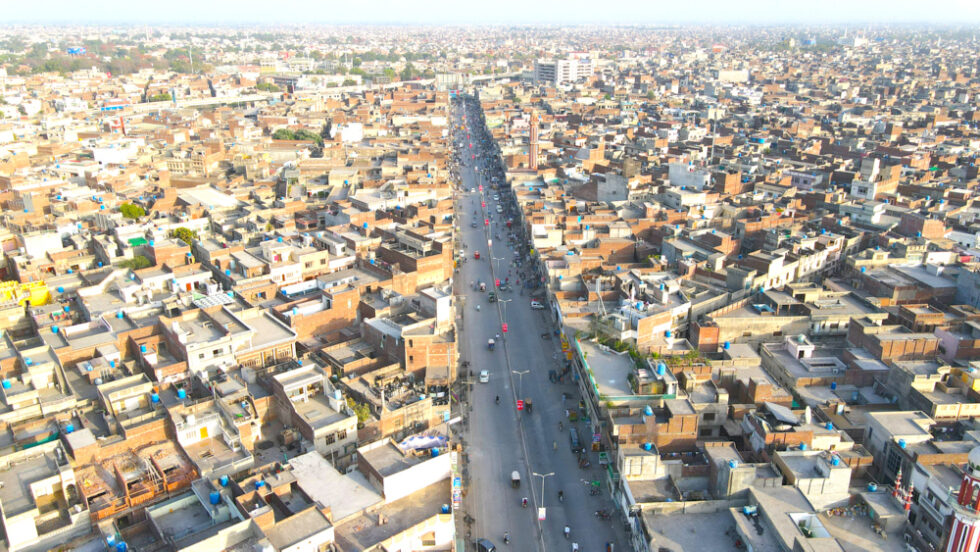
Khan Pur sansi:
⦁ Gujranwala’s history is older than 500 years old.
⦁ In 16th century the first name was khan pur sansi
⦁ Khan Pur sansi was started with a tribe named “SANSI”.
⦁ People of sansi tribe named the area after their one leader whose name was KHAN MOHAMMAD SANSI.
⦁ Later khan Mohammad found 11 more villages around that area.
⦁ Khan Pur sansi name renamed for 300 years. later it was renamed
GUJRAOLI:
⦁ During 18th century khan pur sansi came under the dominancy of Gujars. Sansi tribe tried hard to maintain their roots with the khan Mohammad Sansi but the Gujars dominated the area and renamed the city. Khan Pur sansi start knowing as GUJRAOLI (the city of gujars).
⦁ According to some narrative the Gujraoli was renamed after a Gujar person who had Persian wheel and he supplies the water to the whole region. Gujraoli renamed as CHAUDARY GUJAR once again.
SIKH empire:
Gujranwala has a strong and deep connection with Sikh empires. Even the Hindu and Sikh remembers this era with golden words
⦁ When the mughal emperor Aurangzeb Alamger died in 17th majority of Sikh start moving in Punjab.
⦁ A Sikh whose name was CHARAT SINGH came from AMRITSAR to khan pur and took the possession of all those 11 villages. Taking the advantage of last breathing mughal empire Charat sing and his son Mahan singh, head of a Sikh clan, started to raise a Sikh empire.
⦁ Charat Singh raised a fortification around 11 villages in 1757.
⦁ Gujranwala started getting the popularity during the era of Charrat Singh and Mahan Singh but this popularity become much higher when maharaja Ranjeet Singh stand for the Sikh empire.
⦁ Charat singh and Mahan singh established the Gujranwala Khalsa council. The council established the first school and gave it the name “Khalsa School” which was later turned in “Khalsa College”.
⦁ In 1708 Maharaja Ranjeet Singh was born he ruled the Gujranwala strongly .he declared the Gujranwala as capital of Punjab.
⦁ Charat singh and Mahan laid the foundation of SHERA WALA BAGH with the status along it
⦁ Maharaja Ranjeet singh the son of Mahan singh and grandson of Charat singh were born in Gujranwala city’s PURANI MANDI.
⦁ He starts fighting for Gujranwala when he was just 10 years old. And defeated the king of Afghanistan ‘zamaan shah durani’ when he was just 17 years old.
⦁ Maharaja Ranjeet singh was a great warrior people remember him as a SHER E PUNJAB and the first ruler of Punjab. He untied the whole nation under one flag he ruled over Gujranwala as a strong ruler.
⦁ Lahore was ruled by Afghans and Bhangis Misl .ranjeet sigh annexed Lahore from bhangis. And from this success his he raised Sikh kingdom. And capital was later moved from Gujranwala to Lahore.
⦁ Ranjeet singh was the only who fought with afghans for the long time and defeated their many tribes.
⦁ Maharaja Ranjeet Singh raised his khalsa military. His armies included Muslims Hindus and Sikhs. One of his great commando Sardar Hari Singh raised walls around Gujranwala. He established the street system and beautiful nature attractive parks which are still present in Gujranwala. On estimate 500 shops were laid in the bazaar. Hari singh nalwa was the person who gave Gujranwala a new map.
⦁ Ranjeet singh also remembered for holding KOH E NOOR HEERA. He left this diamante to the jaganath temple. It was given by Shuja Shah Durrani to Ranjeet Singh.
⦁ Ranjeet Singh ruled over Gujranwala for 40 years. He was strongly alcoholic. Due to small pox in childhood he becomes blind from one eye. died in sleep because of extreme alcoholism in some books his death is mentioned With stroke or liver failure
⦁ After the death of ranjeet Singh in 1840 the Sikh empire scattered into small communities ruled by Sikh jagidars.
⦁ Majority Sikhs focused to Guru Nanak Pura, Guru Gobindh Garh, and Dullay muhallah. And Muslim communities focused on the area s n old city’s Rasul Pura, Rehman Pura and Islam pura.
⦁ Muslim were covering 70% of the population in India but Hindu and Sikh remained dominant because the two third parts of properties and business matters were owned by the Hindus and Sikh. Muslims were far behind in the matter of education economic and finance.
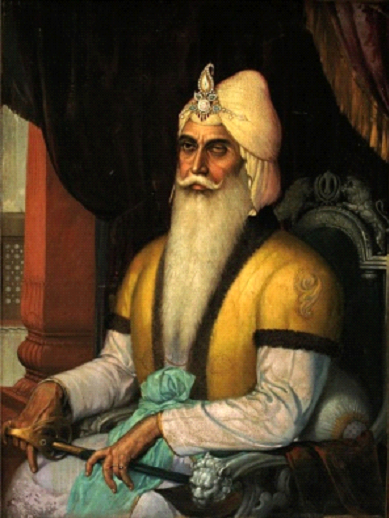
Maharaja Ranjet Singh
Maharaja Ranjit Singh (1780–1839) was the founder and ruler of the Sikh Empire in the northwestern region of the Indian subcontinent. He was born in Gujranwala (now in Pakistan) into the Sukerchakia Misl, one of the Sikh confederacies. After losing his father at a young age, he rose quickly as a leader due to his strong political and military skills. At just 19 years old, he captured Lahore in 1799, which became the capital of his empire, and in 1801 he officially declared himself Maharaja, uniting various Sikh misls under his rule.
Today, Maharaja Ranjit Singh is remembered as one of the greatest rulers of South Asia, admired for his leadership, unity, and secular governance style, and he remains an important historical figure in both Pakistan and India.
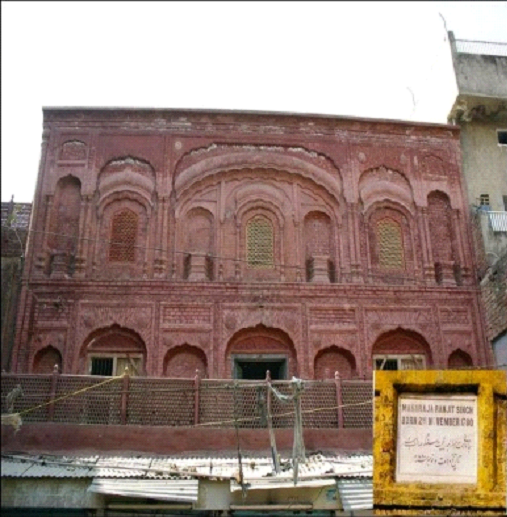
Birth Place of Maharaja Ranjeet Singh
Maharaja Ranjit Singh was born in Gujranwala (now in Pakistan) in 1780. At that time, Gujranwala was part of the Sikh confederacies and an important military region. He was born into the Sukerchakia Misl, a powerful Sikh ruling group in Punjab. His birthplace played a key role in shaping his early exposure to leadership and warfare, as the area was often involved in battles and power struggles among local chiefs. Today, Gujranwala is in modern-day Pakistan and is remembered as the birthplace of one of the most powerful rulers of the Sikh Empire.
British period:
⦁ A major downfall occurs when in Sikh rules period when the Gujarat battle started. Dalip sing the only son of ranjeet Singh Empire and the other 35 Sikh chief, surrender before a British general Gulberth.
⦁ In 1848 British Empire captured the area under their rule. By taking advantage of week Sikh empire.
⦁ On March 29 British declared the Punjab as the part of British rule in the Lahore Darbar. Dalip singh and all the Sikh chiefs were present there
⦁ The development of Gujranwala keep growing eve after the death of ranjeet singh by the British Empire. They wanted to rebuild the whole area according to their plan.
⦁ They established the railway line along the grand trunk road it was toward eastern Punjab 100 yards long. This railway line connected Gujranwala with other cities of Punjab.
⦁ A deputy commissioner of British administration Mr. Arthur Brandreth constructed Sialkot Darwaza, Lahori Darwaza, and Khiyali Darwaza.
⦁ Another deputy commissioner constructed a red brick clock tower made in Gujranwala’s center to mark it as a center of city.
⦁ British administration made civil lines for Europeans. Civil line was providing a peaceful environment for study and worship.
⦁ Christians start moving toward Gujranwala during the British rule and Gujranwala become home to many schools and churches.
⦁ The first church was made in 1875 in the civil lines area
⦁ British used the house of charat sigh as a passport office at that time.
⦁ Development of Gujranwala did not stop even after the separation of Pakistan.
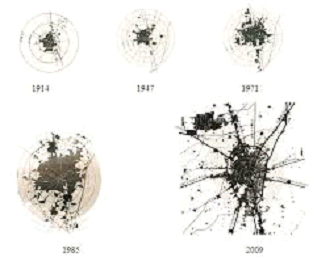
Growth of Gujranwala
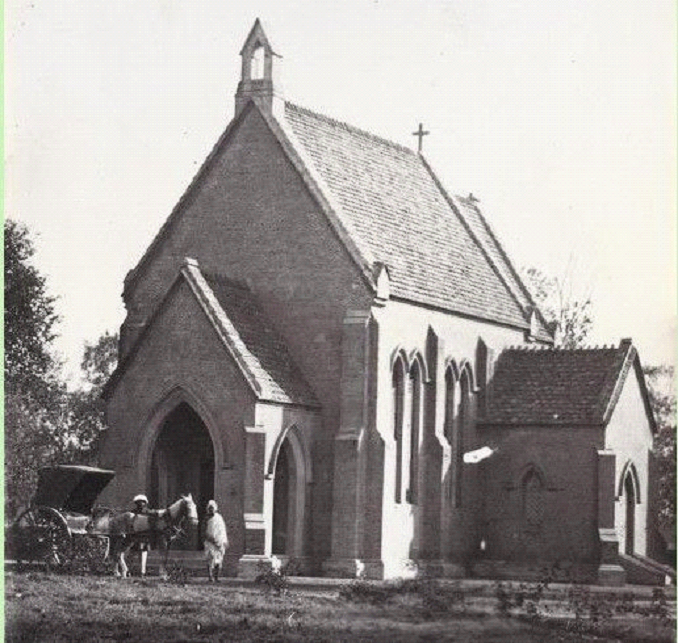
Old picture of Church
About the Author


amazing writes