Introduction
Most business owners i have talked to have same story which is we made website make it live and then no look after because of lack of time. Nobody touched it again. That was three or four years ago. Meanwhile customers are landing on it, getting a bad experience, and leaving without saying a word. You’d never even know.
A slow website or one that breaks on mobile isn’t just annoying for visitors. It’s the thing that makes them leave and not come back.
Why Most Local Websites Fail
This isn’t unique to one business or one industry. It’s a pattern you see everywhere:
- Someone built the site cheap and fast, and nobody’s looked at it since
- It works fine on a laptop but falls apart on a phone screen
- Google barely knows it exists because the SEO was never properly set up
- There’s no real reason for a visitor to do anything—no call button, no clear message, nothing
- The whole thing runs on a bloated theme with plugins stacked on top of plugins
Usually what happens is a customer says something offhand, or the owner notices calls have slowed down and can’t quite figure out why. Nine times out of ten, the website has something to do with it.
What a Website Should Actually Do For You
A website isn’t a brochure. It should be working for your business around the clock. That means a few non-negotiables:
- It loads fast — not just on WiFi, but on the kind of mobile data most people in Gujranwala are actually using day to day.
- Google can find it — proper structure, clean code, and the right metadata aren’t optional extras. They’re the foundation.
- It works on phones — this shouldn’t even need to be said in 2025, but here we are. If it breaks on mobile, you’re losing most of your visitors.
- It tells people what to do — call, order, visit, inquire. Pick one and make it obvious.
How Things Have Changed
Building a proper website used to be something only big companies with serious budgets could afford. That’s genuinely not the case anymore. The tools available today—frameworks like Next.js, better hosting, smarter CMS options—mean a small or mid-sized business can have a site that performs just as well as anything a large company is running.
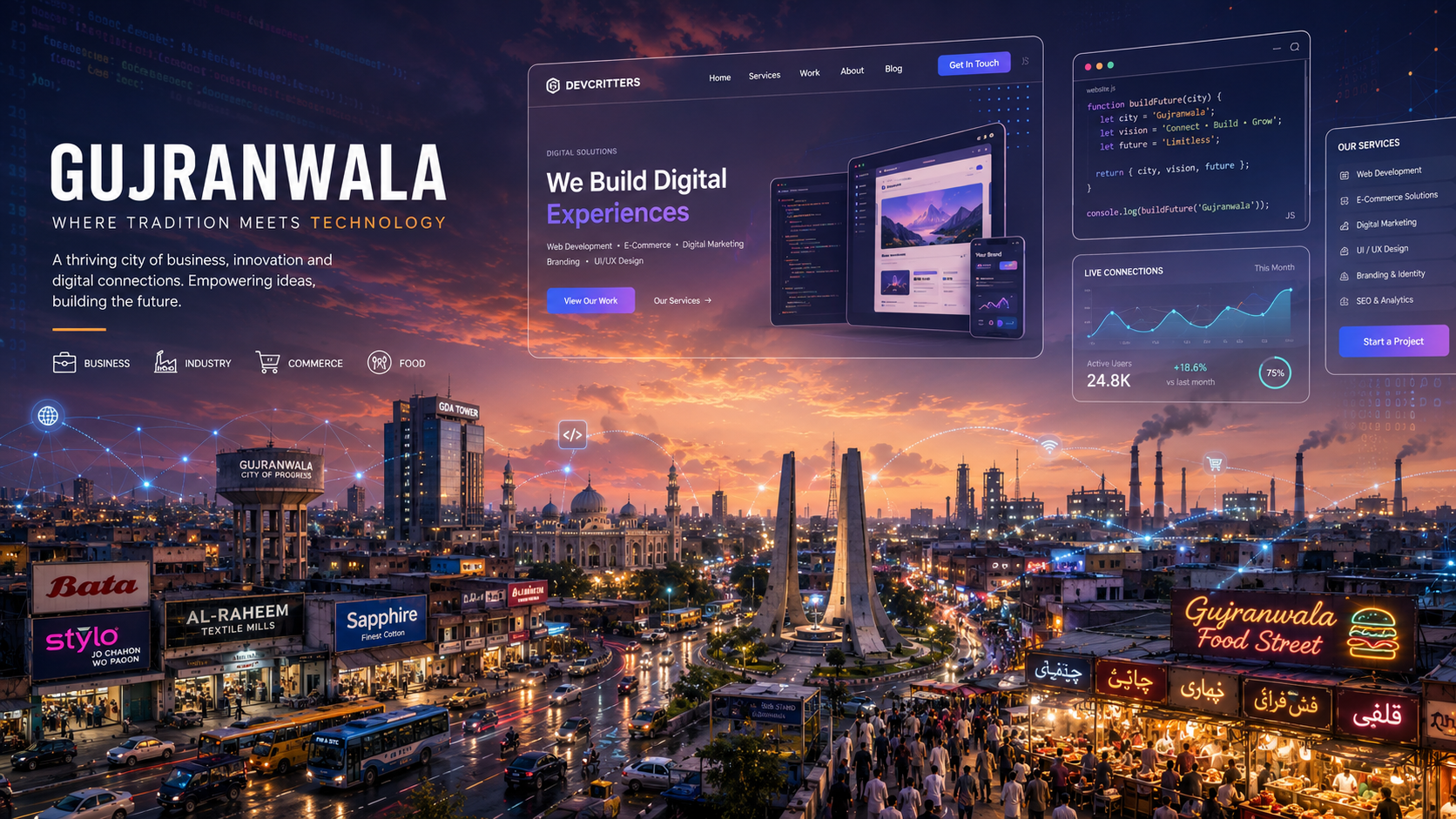
Teams like DevCritters work specifically with these tools, and the difference between what they build and what most local sites look like right now is pretty significant. Not because of fancy design—but because of how the thing actually runs and ranks.
What This Means for Businesses in Gujranwala
Gujranwala has real businesses doing real things—manufacturing, food, retail, services, exports. The product quality is there. The work ethic is there. What’s often missing is a digital presence that actually reflects that.
The businesses that fix this now are going to have a real advantage. More Google visibility, more incoming inquiries, more trust from first-time visitors. The ones that wait are going to keep wondering why their bigger competitors keep pulling ahead.
Bottom Line
No one tell you to revamp but slow pages, an outdated look, not showing up on Google—these things add up. Every day that stays the same is a day it’s quietly pushing people away.
If you want to see what modern web development actually looks like for a business like yours, this is a good place to start: DevCritters
About the Author